Commentaries on Local Justice by Bill Martin

Tag: Broome County Budget

2027 Broome Justice Budget?

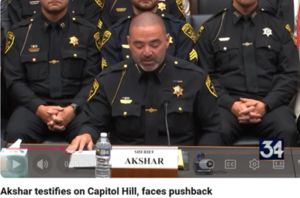
The Sheriff is in the news again, this time the national news.  On September 15, 2026 he led a delegation of Sheriffs to testify in Congress, denouncing New York State’s new law that prohibits formal agreements with ICE. This endangers, he tells everyone, the county, the state and the nation. Along with other New York Sheriffs he demands full power to cooperate with ICE and Federal authorities as he sees fit.  It was compelling political theater in support of Trump’s war against migrant workers.

What captured much of the media however was a forceful exchange over a women’s charges of an exploitative relationship following Akshar’s investigation of the homicide of her son. Akshar called the woman’s allegations “fictitious and slanderous.” When U.S. Rep. Dan Goldman challenged Akshar’s credibility to represent law enforcement, Akshar was enraged: “Only a degenerate politician like you would bring this up at a hearing like this!” Closer to home Akshar’s work with ICE has caused him much trouble, ranging from disrupted town halls through protests at the jail to continually contested county legislative meetings.
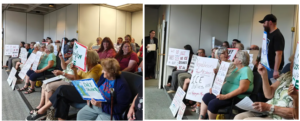

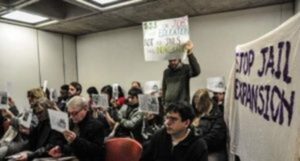
Legislative Meeting Sept 19, 2025

Give credit where it is due: his support for mass policing, incarceration, deportation and the President are consistent and longstanding, appearing at Trump rallies many years ago.

And with his own spin doctor-the first appointment he made when elected Sheriff-we can expect to see more aggressive and continuous appearances by Akshar. But will Broome County buy it? Will legislators continue to support the Sheriff and these policies in the face of public revulsion with ICE? A test is soon coming: the 2027 county budget.

Here Comes the Budget, Again
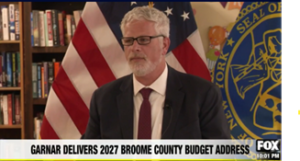
The County Executive had little to say in his presentation on the proposed 2027 Broome County budget about county policing and incarcerating residents. Other than praising the Sheriff and his good works, Jason Garner was quiet on the Sheriff’s budget, speaking only about a little more money for bullet-proof vests for law enforcement officers. And who could be against that?

But take a closer look: it’s a bit duplicitous. The Sheriff’s budget surpasses $60 million for the first time. The jail budget increases by over 10% to at least $42 million.  As in past years there is more money for jail salaries and benefits ($31 million) including $4.9 million for overtime.

More Bearcats!

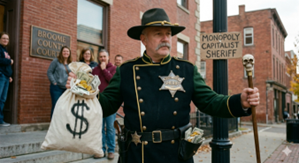
Dig deeper and there are further surprises: Broome County gets a new Bearcat! No, not a star recruit for the local State University of New York’s Bearcat athletic teams, but $360,000 for another armored personnel carrier (Capital Budget, p.13). Yes, it’s another one: this is the third one the Sheriff’s office has added to his fleet, following the 2019 Casspir (formerly used to wage war against Black South Africans), a 2020 Bearcat (purchased with commissary profits legally required to be spent on the rehabilitation of incarcerated residents no less)—and there is at least one more in the county, the Binghamton Police Department’s Bearcat, purchased in 2019 with then State Senator Akshar’s assistance.

The Bearcat joins an impressive stream of war-fighting equipment: military-grade transport trucks, enhanced Humvees, sound cannons, multiple surveillance drones and so on. What have multiple armored vehicles been used for other than policing protests, poking holes in windows of parolee’s homes, and entertaining children at county show-n-tells? We don’t know. Are fevered heads envisioning fighting an invasion from Canada across Lake America?

AI generated

Build it and they will come?

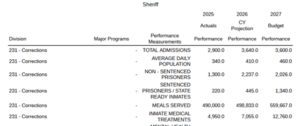
Looking forward the county budget tells us to envision higher jail costs, more costly incarceration of Federal and ICE prisoners, and jail expansion. In his budget proposal the Sheriff estimates an increase in the jail population from 340 in 2025 to 410 in 2026, and on to 460 in 2027 (County Recommended Budget p.460). Costs rise for related food, medical treatment, hospitalization, transportation, and other needs of poor residents.
This is an old story, familiar to students of mass incarceration: build it and they will fill it. Data-driven studies show that construction of prisons propelled mass incarceration through the 1980s and 1990s, especially in impoverished rural communities (and especially Black communities).[1] Largely ignored was the boom to build jails exemplified by Broome County, fed in part by the Comprehensive Crime Control Act of 1984, sponsored by Senator Strom Thurmond and championed by Senator Joe Biden, which led to local county jails becoming depositories for federal prisoners including ICE detainees.[2]

Broome followed these trends: when IBM fled the area 18,000 jobs evaporated, poverty increased, the local population declined, and incarceration accelerated. In the late 1970s the Broome jail housed fewer than 50 persons, tripling to 150 in the late 1980s. A brand new jail was then funded, located on land outside the city donated by the State University of New York.

It opened in 1996 to hold 536 persons.  Jail numbers rose to 500.  In 2014 a study by a jail architect firm was commissioned by the county and projected the need for a 710-bed jail. In 2016 Democrat and Republican legislators joined forces to vote $6.8 million, over a protest in county chambers, to expand the jail to a capacity of 600.
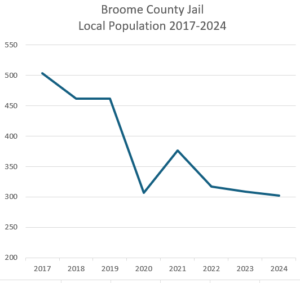
But then numbers fell. Ten years of community and statewide protest produced criminal justice reforms that reversed the drumbeat for mass incarceration.  While local politicians, billionaires, and correctional officers facing felonies had long easily gotten bail and avoided the jail, other local, poorer residents now could as well.  Jail numbers, excluding Federal detainees, fell to barely 300 persons, paralleling even longer and steadier falls in crime rates.
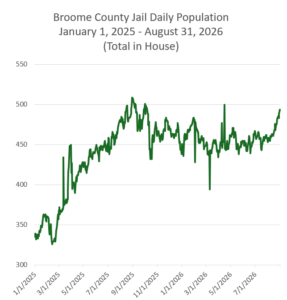
Then came the local blowback. In 2023 a new Sheriff and District Attorney arrived in town, and two years later, came a new President. Drug wars, crime panics, a mania over migrants, and funding flowed again.  Jail numbers have been steadily increasing, reinforcing Broome County’s claim to having the highest incarceration rate of all 62 New York counties.
And then came ICE

Trump’s war against migrant workers was expected to help keep the jail full.  Not because of the Sheriff personally signing a 287g agreement with ICE to serve detainee warrants, but by simply continuing a 2002 agreement to house Federal prisoners which had long been used to sustain county cooperation with ICE and house ICE detainees. It is this agreement with the U.S. Marshalls Service that conservative New York State Sheriffs and Akshar defend. New York State’s new law against cooperation with ICE may lead to the termination of housing all federal prisoners, like the local dairy worker held at county expense for six months in the Broome County Jail on solely immigration charges.  And lots of Federal funding is at risk for Sheriffs. Indeed Sheriffs report they make money from the Federal reimbursement of $110/day per person.  Among the Sheriff’s 2027 Objectives in his budget statement:  “Maximize available housing capacity to generate revenue through agreements with the U.S. Marshals Service, U.S. Immigration and Customs Enforcement (ICE), and other New York State counties” (p.236). By Sheriff Akshar’s own formula, however, the cost of boarding in a person is $274/day, meaning the county loses $164 for every Federal detainee every day. For 2025 this totaled $2,860,000.

Who Profits?
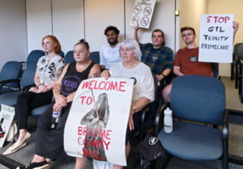
Where the Sheriff does turn a profit is on charges for phone calls, tablets, and commissary sales. At the June 18, 2026 meeting of the county legislature community activists and families of the incarcerated rallied against the proposal to renew the Sheriff’s monopoly agreement with the out of state GTL corporation; up for a vote was a contract that would dramatically increase the prices on phone, video, text and tablet use. When questioned by puzzled legislators, the Sheriff simply said Federal law dictated it and he needed to make more money. Fake news, said Justice and Unity for the Southern Tier in its press release. Why are calls to stay in contact with family free in state prisons and other New York State jails, but cost 12 cents per minute in Broome County? Infrastructure and running costs run around 1.5 cents at best. Why does the Sheriff charge a 60% profit on every call? For the first time five legislators voted against a budget item for the Sheriff.
One might ask the same of other jail contracts.
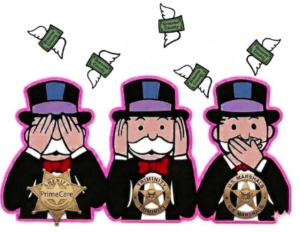
Where do the 44% profits from commissary profits go? Why was the medical provider overpaid by at least $600,000? What will be the cost of two looming class action lawsuits over salmonella poisoning of 320 persons, with 12 sent to the local hospital, by the jail’s out of state private food contractor?  Successive county audits in 2024 and 2025 continue to report the lack of legally registered contracts and the inability to trace prices, sales, expenditures and revenues. No member of the public could pose these questions to legislators much the sheriff at recent county meetings.

There is only one scheduled chance a year for persons to speak while the legislators listen (but don’t respond) Thursday, October 22nd at 5:00 p.m. 6th Floor, County Office Building, 60 Hawley Street,

Given recent protests by the audience this past year over justice, housing, and health expenditures, expect a long meeting.  The public has much to say.

***

[1] John Eason, Big House on the Prairie:  Rise of the Rural Ghetto & Prison Proliferation (University of Chicago Press, 2017).

[2] “If You Build It,” Vera Institute of Justice, accessed September 26, 2026, https://www.vera.org/in-our-backyards-stories/if-you-build-it.


Broome Jails Long Island Teen for ICE

This week Newsday reports from Long Island that another Roosevelt High School teen has been captured by ICE.  This time the teen was sent not to a Texas ICE detention center but to the Broome County Jail.  He has actually been there for over two weeks now, far from his mom and school (he is  a midfielder, #17, on the men’s soccer team).  He sits alone, anxious, and in shock. He does not know what will happen to him.

Why is Broome County Jail caging Long Island teenagers for ICE? Is it because the Broome Sheriff and Nassau County Police Department have both signed 287g agreements with ICE?  Or is because Broome is the official ICE detention center on the route from NYC to the over-capacity Buffalo ICE detention center?

It isn’t because he makes $ for the Sheriff:  indeed by the Sheriff’s own admission it costs $274 to keep someone for one day (his estimate during the state correctional officers’ illegal strike that he supported). And yet the Federal Goverment only reimburses $110/day.  And there are scores of Federal detainees held every day, some for months and months. How many ICE detainees are there, how long are they incarcerated here? We don’t know.  But clearly $ millions are being spent to maintain for years a supersized jail.

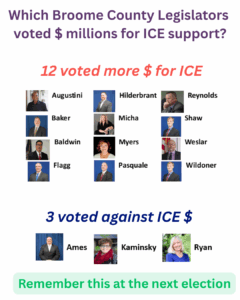
In the face of three successive protests and much testimony in the Broome County Legislative chamber against ICE detention, 12 of 15 county legislators voted recentlly to endorse the Sheriff’s budget with $ for ICE.  Did they really want out-of-town teens incarcerated at their, our expense?

As crime and incarceration goes down in NY, why are costs going up?

OPINION reprint from Times-Herald Record (hyperlinks added; supporting data here)

William Martin

Special to the USA TODAY Network

Published 12:18 p.m. ET March 29, 2023

Continuing declines in crime rates and incarcerated populations pose the question: what to do with our increasingly empty jail cells? The trends are unmistakable for the smaller cities and towns of the state. Index (serious) crime rates for counties outside NY City have fallen by 39% since 2012. County jail populations have correspondingly fallen by 42% in the last ten years.  As county budgets come under increasing pressure, questions about fiscal overreach are emerging.

Thus the questions posed by the Ulster County Comptroller to his elected officials:  why is the county jail so large, so heavily staffed, and over-funded given the drop in incarcerated populations? Aren’t there better uses for the county money? His recommendation: “a reduction in facility capacity and commensurate staffing” and an “examination of the costs of operation to ensure that they are commensurate with the needs of the community”.  

The process has begun in some counties. Duchess county has closed empty pods that housed 200 persons and downsized its new jail from 569 to 328 beds. The Albany Sheriff has repurposed empty cells into housing for the homeless including homeless community college students.

Broome County, regularly ranked as the top county in the state for jail incarceration, faces similar trends—and equally daunting fiscal dilemmas given looming state budget cuts.  In the last ten years index crime rates for Broome County have fallen steadily, dropping by 35 percent–even as the number of guns and gun violence has risen.

And jail capacity and populations? In 2015 the county was convinced by jail authorities and an external study they commissioned to spend $6.8 million to expand jail capacity from 536 to 600 persons.  The expected boom in jail numbers, projected to hit 700, never came.  Average daily jail population has fallen instead from 500 to below 300, half the capacity of the jail. In January, 296 persons were housed in the jail, including 26 held on behalf of federal authorities (and of the 296 only 50 were convicted and sentenced for a crime).

The result? As in Ulster, a dramatic increase in the cost to keep a person in the county jail, rising from $45,000 in 2012 to $109,000 now.

For the cost of jailing one person on misdemeanor charges, the county could offer free tuition to SUNY-Broome to twenty local  youth.  Or hire two mental health counselors.  Or offer incentives to respond to the staffing crisis at the county’s debilitated Department of Social Services, with over 80 vacant positions. Local elected officials appear oblivious to these needs, expanding instead the jail budget yet again this year, and empowering the newly elected Sheriff to hire up to 38 more correctional officers by offering $5,000 bonuses and lowering educational requirements.

As in Ulster the story is straightforward:  its time to ask local legislators and auditors to investigate and adjust staffing at the county jail—and release funds to where they might further reduce crime, as in supporting underfunded mental health, housing, and youth services.

William Martin is a Johnson City resident and professor emeritus at Binghamton University.

Broome County’s ARPA Bonanza: Who Captured the $37 million?

Published online at Binghamton Bridge, Jan 24, 2023

What would you do if someone gave you an unexpected $37 million? A once-in-a-lifetime bonanza?

That was the delicious dilemma faced by the Broome County Executive and Legislators when the Federal American Rescue Plan Act (ARPA) was passed in March 2021. ARPA allocated $350 billion to municipal, county, state, and tribal governments to assist in COVID recovery. COVID had eliminated jobs, impoverished families, overwhelmed public health services, and destabilized the mental and physical health of youth, adults, and seniors alike. ARPA monies were intended to address the public health, economic, and housing needs arising from the epidemic. ARPA guidelines for spending were flexible, but emphasized prioritizing vulnerable groups and equitable economic recovery (Federal guidelines are here).

How did Broome County spend the money? We don’t know. Neither the press nor county government has provided a list or tabulation of funded projects. When the local Press and Sun-Bulletin newspaper reported on the use of $163 million in ARPA funds across the Southern Tier, Broome County had only one, unspecified commitment mentioned.

Binghamton’s $46 million in ARPA: where did it go?

The City of Binghamton was no clearer on how it was spending its $46 million.  Like the county, the city did not hold any community public hearings, get public input, or provide any transparent accounting. Thanks to investigations by community activists we now have the details on a new website, #bingamtonslushfund, which tracks the city government’s ARPA decisions.

It’s not a pretty picture. The group’s conclusion: ARPA dollars were recklessly laundered into a slush fund controlled by the Republican mayor and city council members.  They then funded pet projects unrelated to COVID, from a parking garage to a luxury housing project downtown. Judge for yourself by looking at the funded projects detailed on their website here.

Broome County’s $37 million: where did it go?

Paulus Housing Project Johnson City $4.7m in tax rebates

County finances receive far less attention by the press and community groups.  A freedom-of-information request to the county asking for ARPA expenditures was submitted in September 2022.  It finally received a response in January 2023.  It may be downloaded here.

The summary results? While lots of groups were funded, no substantial money went to address the health impacts of COVID, the local housing crisis, or the mental and physical health aftermaths of COVID.  In the midst of the fentanyl/tranq epidemic exacerbated by COVID isolation and poverty, we cannot fund, for example, the community-based initiatives other cities and counties have launched.

Who were the big winners?  Developers and the Sheriff–and a distant third group, county parks.

Here are some of the developers’ pet projects, all charging commercial, market rate rents:

Sparc Corp JC Oakdale Mall                                                      $7,170,000
19 Avenue B Housing Project & Phoenix/Huron                $2,800,000
Conifer & LeChase (IBM proje3ct) apartments                   $1,000,000
Paulus Development (JC EJ building) apartments                 $750,000
SEPP Group Endicott apartments                                              $670,000
K Mart Plaza                                                                                $1,000,000

None of these projects are contingent on providing the numerous living-wage jobs and low-income housing we need. Indeed as has happened in both Binghamton and Johnson City, they are likely to decrease affordable housing for poor and Black residents as gentrification and expensive housing projects continue to proliferate around new SUNY downtown buildings–and displace existing lower-rent housing.  As reported in the SUNY campus newspaper Pipedream, “BU has acquired over 30 plots of land throughout Broome County to expand the school, demolishing the 50 single-family homes and apartments in them.” Lacking customers due to gentrification driven by the SUNY Nursing school, the last supermarket in downtown Johnson City closed, driving people to overwhelmed, nearby pantries. Faced with public debate over the impacts and cost of student housing, SUNY Chancellor John King in a visit to Binghamton this past week coldly asserted this was the cost of “economic development.”

50 Front St Luxury Apartments
$16.8m tax rebates

And most of the ARPA projects already have been underwritten by   state, county, or municipal funding . The most egregious diversion of public funds? Up to thirty years of tax exemptions through so-called PILOT agreements provided by local development agencies as reported by the press. In Broome County these have granted property and sale tax rate reductions and exemptions, most notably for one luxury housing development after another.  As recorded in cost-benefit analyses by the Broome County Development Agency, these include $4.7 million in rebates for the EJ Victory Building in Johnson City (156 apartments) and, in Binghamton, rebates worth $7.5 million for the Ansco building on Emma Street (100 apartments), $16.8 million in tax abatements for the owners of the “50 Front Street Luxury Apartments” (122 apartments, opening with the highest local rents), $3 million for Chenango Place on Court Street (94 apartments), $6.5 million for the gated, luxury student apartments next to the SUNY Downtown Center (127 apartments), and another $9.4 million rebate to the developer of the Oakland Mall—to mention but a few. ARPA adds more fuel to the bonfire elimination of corporations’ tax bills, while, like new, tax-exempt SUNY and hospital operations, increasing demand for more city services.

Up on the Hill: The Sheriff’s $ 7 million

Pushed aside and out of sight, where will the homeless and people with health problems go? For far too many the jail has emerged as the county’s major substance use and mental health “treatment center.”  And that’s what the county funded from ARPA, giving $7 million to the Sheriff for unspecified purposes.

The Sheriff has a $42 million budget, with the jail accounting for $32 million. Why the additional $millions? The need for road patrols surely did not increase under COVID.  Nor did jail numbers.  Indeed due to lower crime and criminal justice reforms the jail population has been dropping for years. Built and expanded to incarcerate 600 persons, the local jail population rarely exceeds half that number. Last month there were fewer than 300 local residents in the jail (and only 52 convicted of a crime). The number of Correctional Officers had also fallen proportionally.

And yet an additional $7 million was allocated from ARPA funds.  Democratic and Republican County Executives and Legislators have for decades privileged the jail. But what are the $7 million being used for? A hiring boom for up to 38 more Correctional Officers is apparently underway according to the press. How is this justified?

This is a costly commitment, for correctional officers are expensive. Of the 46 county employees who earned over a $100,000 in 2021 (the last posted year), at least 32 are correctional officers (and all but 5 of the 46 are employed by the criminal justice system). The highest paid employee? District Attorney Korchak. Its the cost of making Broome County, of all 62 state counties, the county with the highest jail incarceration rate.

Elite Capture

It is too late to turn back irresponsible ARPA spending: although ARPA funds may be spent over 5 years, over $32 million of the county’s $37 million has already been spent. We can–as has the community group working on the City of Binghamton ARPA funds–press local officials to hold public hearings, account for their decisions, and reallocate remaining and future county monies to meet community needs.

As the story of county use of ARPA and Broome County Development Agency funds demonstrates, however, the problem is deeper and long-standing.  Corporate and political elites–all too often an interlocking web of developers, real estate interests, and lineage politicians–have long captured county and city funds.  Overturning this corporate/political complex, and allocating public funds to real human needs like housing and health, will require an equally long-term community struggle.

Ansco “Sophisticated Luxury Living” $7.5m tax rebates

© 2026 JUST Talk

Theme by Anders Noren — Up ↑